Liu and Shrum considered there to be three dimensions of interactivity:
- Active control - "voluntary and instrumental action that directly influences the controller's experience" (Liu and Shrum, 2005: 105).
- Two-way communications - "the ability for reciprocal communication between companies and users and users and users" (Liu and Shrum, 2005: 106).
- Synchronicity - "the degree to which users' input into a communication and the response they receive from the communication are simultaneous" (Liu and Shrum, 2005: 108).
 These form a 3D model representing popular online marketing tools based on interactivity. High scorers across these include online stores (such as Amazon) and related web communities, whereas the bottom end of the scale includes the likes of unsolicited emails (junk or spam). It is no surprise that social networking sites (Twitter, Facebook, etc.) have become intrinsic to many online marketing strategies on behalf of their clients. Cool social networking brings about cool products and brand association. Loyalty and memorability go hand in hand, particularly if allied to unexpected bonuses, like the festival tickets to raise the profile of the VW Fox amongst the mostly mobile young adults of Sao Paulo. In terms of advertising, McStay describes interactive advertising as building "richer, deeper and engaging relationships, but then the same can be said of successful advertising campaigns" in fostering "long-lasting brand relationships often characterized by trust and goodwill...consumers, to some extent, can take control of media, marketing and advertising" (McStay, 2010: 191).
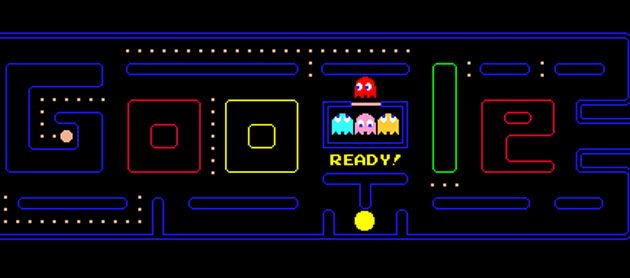 On anniversaries, Google's homepage occassionally goes interactive. This can include strumming guitar chords and play music. On 21st May 2010, recognising 30 years since Pacman's launch, users could play the game within the outline of the letters. Its popularity spawned a Facebook page, currently having almost 1 million likes. Interactive advertising examples include the picture above. There was also a series of recent adverts released by the British Army, relating in the first person; the audience is presented with a series of situations and three suggested responses.
Interactivity is a product of technological (and digital) advances and applications. McStay mentions how Diageo Guinness used GPS-enabled and non-GPS enabled mobiles which enabled users to find the nearest Guinness through Guinness "Navi". It could show maps of establishments, photos, reviews, opening times, etc. (McStay, 2010: 202-203). Pardon the pun but "It must do you good".
- Flaherty, L.M., Pearce, K.J. and Rubin, R.B. (1998) 'Internet and Face-to-Face communication: Not Functional Alternatives', Communication Quarterly, 46 (3), 250-268
- Liu, Y. and Shrum, L.J. (2005) 'Rethinking Interactivity: What It Means and Why It May Not Always Be Beneficial', in Stafford, M.R. and Faber, R.J. (2005) Advertising, Promotion and New Media. M.E. Sharpe: New York. Chapter 5
- McStay, A. (2010) 'Creativity, Science and the New Consumer', Digital Advertising. Basingstoke: Pelgrave-MacMillan. Chapter 7
- Rolighetsteorin (2009) Piano stairs - TheFunTheory.com - Rolighetsteorin.se. [video online] http://www.youtube.com/watch?v=2lXh2n0aPyw [Accessed 11th April 2012]
- Steuer, J. (1992) 'Defining Virtual Reality: Dimensions Determining Telepresence', Journal of Communication, 42 (4), 73-93.
- tippexperience (2010) NSFW. A hunter shoots a bear!. [video online] http://www.youtube.com/watch?v=4ba1BqJ4S2M [Accessed 21st April 2012]
- Liu, Y. and Shrum, L.J. (2005) 'Rethinking Interactivity: What It Means and Why It May Not Always Be Beneficial', in Stafford, M.R. and Faber, R.J. (2005) Advertising, Promotion and New Media. M.E. Sharpe: New York. Chapter 5
- McStay, A. (2010) 'Creativity, Science and the New Consumer', Digital Advertising. Basingstoke: Pelgrave-MacMillan. Chapter 7

No comments:
Post a Comment